ABRSM 2027–2028 Piano Syllabus: The Full Written Review
Watch or listen to this review
TL;DR
- A lot to like, with many enjoyable pieces and some excellent discoveries.
- Grade 8 is much more serious and challenging, perhaps an overcorrection to the previous syllabus.
- Biggest concern: popular-style pieces creeping into List B below Grade 8.
- In all grades below Grade 8, students can take an ABRSM exam with only one classical piece.
- Overall: good pieces, worrying direction.
Contents
Introduction and background
It’s already time for the new new ABRSM piano syllabus! Because of the worldwide popularity of ABRSM exams, the pieces contained within these pages are what multitudes of piano teachers are now going to hear to death until the next syllabus appears two years from now- so this is always a big event in the piano teacher’s calendar! I’ve spent over three weeks becoming familiar with all the pieces in the new books, comparing them against previous syllabuses and other examination boards, and learning all the pieces in the books starting with Grade 8. I’ll be releasing tutorials and performances of these Grade 8 pieces on YouTube very soon, so do subscribe there if you’re interested!
If you’re not based in the UK (home of ABRSM), or Commonwealth and East/Southeast Asian countries (plus parts of other regions such as the Middle East, Africa, and Europe), it’s difficult to overstate just how prevalent ABRSM’s exams are. For a large number of teachers, it’s just a given that their students will prepare for and enter these exams- partly to form clear goals and motivation for students, and partly as an unofficial curriculum. Many teachers encourage their students to progress from beginner to advanced playing mostly ABRSM pieces, hopping from grade to grade- although many would see this as lazy, uncreative teaching, leaning on ABRSM as a crutch. However, this is the reality…
To understand my reaction to the 2027–2028 syllabus, I’ll need to give a brief overview of changes and trends across the major UK music exam boards over the last few years…
-
2019: a representative from LCME wrote the influential article Decolonising the Music Curriculum, heavily criticising the lack of diversity in graded music syllabuses and calling for better representation of women and BBIPOC composers (who I’ll refer to as non-white composers from now on).
-
2020: criticism of ABRSM’s piano syllabus in particular sharpened, including a petition calling for Black composers to be included. Coverage at the time said ABRSM’s piano syllabus gave students no opportunity to study works by Black composers, and the issue was widely linked to the broader Black Lives Matter movement.
-
2020: ABRSM launched their Diversity and Inclusion Plan, explicitly aiming to broaden the music it promotes, commissions and publishes.
-
2020: ABRSM shook up their famous List A/B/C categories: instead of List A being Baroque/contrapuntal and List B being Classical or early Romantic sonata-style repertoire, the lists became more functional. List A now meant faster-moving pieces requiring technical agility, while List B meant more lyrical pieces inviting expressive playing. They also reduced the core Grade 8 book from 12 pieces to 9, and the amount of printed music in that book fell to roughly half what it had been.
-
2021 onwards: RSL were the first to launch a classical piano syllabus with an obvious effort to improve representation of women and non-white composers. LCME, Trinity, and ABRSM all followed suit, generally improving representation in each successive syllabus launch.
-
2022: Trinity released a new piano syllabus with a radically diverse selection of styles, making it possible for students to take an exam without playing any classical music at all, although core classical pieces remained available.
-
2024: ABRSM released their 2025–2026 piano syllabus. Although most of the repertoire in Lists A & B remain classical, it’s obvious that non-classical music is creeping into List B and sometimes even List A. I expressed concern about this direction at the time, noting that in some grades a student could sit an ABRSM exam playing no classical music. In one grade, it was even possible to play only Nikki Iles compositions and arrangements!
Now- I personally don’t believe ABRSM should be allowing students to take exams with only one classical piece. Not everybody will agree with this, but I’ll outline my reasons below.
So I was apprehensive about the direction of the new 2027–2028 piano syllabus… Would ABRSM continue moving towards more pop, jazz and film music in Lists A and B? Or would they pull back and keep non-classical music contained within List C?
When I opened the Grade 8 book, I was almost shocked at just how strongly ABRSM seem to have responded to criticisms of their last Grade 8- people had complained that the standard felt a bit too easy and dumbed down. Well, you certainly can’t accuse them of that in this new syllabus- this new Grade 8 is challenging! And not only technically challenging, but musically challenging. The List A pieces in the book in particular are all substantial demanding options- with the fugue from Ravel’s Le tombeau de Couperin in particular being incredibly musically ambitious. It’s as if ABRSM said “oh, you thought the previous Grade 8 was too easy? Fine, have this!!” And Lists A & B are now almost completely free of non-classical pieces, with one notable exception: a jazz prelude in the alternative List B. Even that one piece does bother me though, because I don’t believe it asks for the same kind of interpretative depth as most of the other List B options. It also makes it possible to pass Grade 8 playing 3 jazz pieces out of 4 in total if taking a Performance Exam…
But on the whole I was incredibly relieved… Gone, for example, was the poorly arranged and unchallenging Studio Ghibli List B piece from the previous Grade 8 book. Instead, all the new Grade 8 List B pieces build up to substantial climaxes, and require real emotional depth from the student. Even if I thought ABRSM might have overreacted by suddenly making Grade 8 consistently at the higher end of technical and interpretative difficulty, I was initially reassured that they were moving back to what they’ve always done best: a core classical foundation, with List C used to explore other styles and provide stylistic diversity.
That was, until I looked at the other grades.
It immediately became obvious that ABRSM are very deliberately committing to a new path: placing sugary, more superficial pieces that are either arrangements of pop or film music, or pieces from a similar commercial sound-world, into List B in every single Grade book (other than Grade 8). For example, we have Taylor Swift in Grade 3 List B and Billie Eilish in Grade 1 List B. There’s also a noticeable creep of these styles into the List B alternative lists.
Now, I know some people will ask: “what’s wrong with that?”, “why shouldn’t we make piano exams more enjoyable and relevant?”, or “what about students who don’t want to play classical music?” I’ve discussed these concerns in previous reviews, but this new syllabus makes the issue feel even more urgent. Before getting into the details of the pieces themselves, I want to explain why I think this is a dangerous and unwise direction, and make the case for why we should all care about this.
(Note: if you just want to find out about the repertoire, production quality, and what’s new in the syllabus, feel free to skip ahead to “Exploring the new syllabus”)
The case for keeping classical exams classical
-
ABRSM’s Prestige
The perception has always been that other examination boards were the easy option, and that ABRSM exams were the respectable, traditional, rigorous option that focused on classical repertoire. The old List A/B/C system was respected precisely because it encouraged students to overcome the very common resistance to learning Baroque and Classical pieces.
If the ABRSM piano syllabus drifts away from having classical repertoire at its core, then what does a Grade qualification mean exactly? Instead of denoting a classical piano qualification, is it now turning into a general piano performance qualification? -
ABRSM’s Role in Keeping Classical Music Alive
It’s worth asking why we teach anything at all… Of course, education is partly about skills. We teach children to read, calculate, write, analyse and think. But more importantly, teaching is also about passing on a love of knowledge, beauty and the kind of understanding that helps students appreciate cultural riches they may not yet know how to value. Much of what matters most in education is not instantly accessible. It requires patience, guidance, and nurturing.This is why we teach Shakespeare, for example. We don’t teach Shakespeare because every teenager naturally longs to spend an afternoon with Macbeth or King Lear. We teach Shakespeare because the plays are culturally and intellectually rich, because they reward effort, and because many students would never discover their power without being led towards them. The same is true of serious literature more broadly. If we stopped teaching demanding literature because many students might be more interested in graphic novels, we wouldn’t just be making education more accessible- we’d be making the next generation culturally poorer.
This isn’t because graphic novels, blogs, or mainstream popular novels are worthless. The point is that some cultural forms already have enormous systems of transmission. Popular culture reaches students constantly through phones, streaming, television, cinema, games, advertising and social media. It doesn’t need institutional help to survive and be understood.
Classical music is different. Many people are unlikely to stumble naturally into Bach’s counterpoint, Beethoven’s drama, Chopin’s harmonic poetry, or Debussy’s colour-world without some kind of patient invitation. And this music often reveals itself most powerfully from the inside… By learning to play it, students become familiar with its language: how phrases breathe, how voices interact, how harmony creates tension and release, and how structure carries feeling over time.
This familiarity becomes physical, aural and emotional. The student has felt the language under the fingers. Familiarity matters, because love often grows from it.This is one reason syllabuses matter. They help decide not only what students play, but what they become familiar with. It’s about passing on a love for cultural and intellectual riches. It’s not just about serving existing tastes; it helps to form new ones.
That is why ABRSM’s role matters. If one of the world’s most influential classical music exam boards increasingly gives students the option to move through the grades with only limited contact with the classical tradition, this is not a small matter of repertoire choice. It changes what we’re helping to pass on as our cultural heritage.
Pop music doesn’t need ABRSM Piano in order to survive. Classical music arguably does need institutions like ABRSM to help each generation discover, understand and love it.
-
The Global Weight of an ABRSM Syllabus
ABRSM aren’t just another exam board. Their choices travel into teaching studios, school practice rooms, living rooms, and exam centres across the world.ABRSM’s reach is enormous: more than 650,000 exams and assessments each year across 93 countries, plus over a million music books sold annually. With that scale comes enormous power to shape what students learn, especially because ABRSM grades have come to define what piano progress looks like for so many people. This is why repertoire choices matter. They tell teachers, students and parents what counts as serious study, what traditions deserve time, and what kind of musician the exam is helping to form.
ABRSM’s historical identity has been built on the classical music tradition, and for generations their piano exams have been one of the most influential routes by which students around the world encounter that tradition. Given ABRSM’s reach, every syllabus profoundly influences what those students are likely to discover, practise, understand and eventually love.
-
Decolonisation Should Expand Classical Music, Not Replace It
ABRSM have been rightly criticised in the past for poor representation of women and non-white composers, and I was one of the voices calling for change. To be fair, ABRSM have made real progress here: recent books, the new syllabus among them, now consistently include well-curated classical pieces by women and non-white composers.I’ve spoken in depth in other syllabus reviews about how these debates around diversity and representation formed part of a wider conversation in which some influential voices were calling for the ‘decolonisation’ of music education. Now, if decolonising a classical syllabus means challenging the narrowness of the traditional canon and showing students that classical music has been written by more than the familiar roll-call of European white men, I’m entirely in favour. But if it starts to mean treating classical music itself as something to be toned down, displaced or diluted in order to make the syllabus more diverse, then I think we have taken a wrong turn.
Classical music has certainly been entangled with privilege, empire and exclusion. But I would argue that the answer is not to make the ABRSM piano syllabus less classical. Surely the answer should be to increase diversity within the classical music that we teach? For example, there’s a huge range of barely tapped classical music riches just within Latin American repertoire! To be fair, ABRSM have included some Latin American pieces in this syllabus, particularly in Grade 7, but given the size and depth of that repertoire, it still feels relatively underexplored. Greater representation of music such as this seems like a much better way to address calls for the decolonising of music education rather than by reducing the proportion of classical music itself?
So my concern is not just about the choices ABRSM have made in this syllabus, but about where these choices may be leading, and how far they may be taken in future… Is their goal to:
a) diversify classical music? Or to
b) gradually de-classicalise the syllabus?I’m also personally suspicious here, and find myself asking whether the increasing number of pop, film and commercial-style pieces included in the syllabus could be acting as a convenient way to improve the diversity statistics published in ABRSM’s Repertoire Diversity Reports, given that women and non-white composers are much more heavily represented in these contemporary styles than in the traditional classical canon? If this is part of what’s happening, even unintentionally, then I believe diversity risks becoming a route out of classical music rather than a richer route into it.
-
Comparing Apples to Oranges
The problem isn’t simply that classical and popular styles are different- there’s a much deeper issue that arises when we place different kinds of musicianship inside the same exam frame, then ask the same mark scheme to certify them as equivalent. It is not just comparing apples with oranges; it is assessing oranges by apple standards.In a notation-based classical piano exam, the skills being assessed are still largely classical ones: accuracy, tonal control, stylistic shaping, balance, phrasing, structural understanding and fidelity to the score. But many of the skills that make popular musicianship genuinely demanding- such as playing by ear, improvising, using chord symbols, comping, arranging texture, responding flexibly, and shaping from a chart- are barely being tested at all. Once pop or film music is reduced to a fixed arrangement on the page, it’s no longer being examined as authentic popular musicianship. It’s now still a classical exam, but with pop branding.
And once these popular-style pieces are assessed largely on classical exam terms, the comparison becomes very uneven. Two pieces may sit under the fingers at a similar technical level while making very different musical demands. In a notation-based graded piano exam, a pop or film arrangement will almost always carry a lower density of interpretative, structural and contrapuntal obligation than a classical work with comparable technical demands. Classical repertoire often requires the student to engage with much higher levels of structural and contrapuntal complexity, harmonic sophistication, motivic development, larger-scale architecture, historical stylistic awareness, and the balancing of inner parts and textures.
These differences also affect the kind of musical journey the performer has to shape- most popular music is built around repetition, atmosphere, direct emotional effect, memorable melodic hooks, familiar harmonic loops, and sectional structures such as verse, chorus, bridge, etc.
Classical music, on the other hand, more often unfolds a narrative journey by using more organic forms- utilising modulation, motivic development, contrapuntal interaction, and heightened tension and release across longer spans.
And these differences also affect expression- popular music often communicates powerful but comparatively direct emotional states- such as longing, uplift, nostalgia, melancholy, heartbreak, and triumph. Classical music can of course be direct as well, and plenty of it is charming, simple or even sugary. But because of the differences in form and development, it usually tends to portray more blended emotional colours. The feelings aren’t just simply presented- but argued, delayed, transformed, contradicted, darkened, resolved or left unresolved.
This is why only considering technical difficulties alone isn’t enough. A pop arrangement may have awkward rhythms, big chords, wide leaps or a similar number of notes on the page at the same tempo, but that does not mean it carries the same musical burden as a classical piece at the same grade.
Now, before people get upset, I’m not saying in any way that this makes classical music better than popular music. I myself play (and teach) rock & heavy metal guitar, and rock & jazz piano. My life would be utterly incomplete without playing guitar in rock bands! I have a favourite analogy I like to use when comparing classical and popular music- cathedrals can be awe-inspiring marvels of craftsmanship. That doesn’t mean I’d necessarily want to live in one!
-
Is it Fair?
If I’ve now persuaded you that classical repertoire really does involve higher levels of interpretative challenge than popular music at a similar technical level, then we have to ask what happens when one candidate takes an exam with a mostly classical programme, while another takes the same grade playing mostly pop or film-music adjacent pieces. Both receive the same certificate. Is that fair?If the same grade can represent such varying types and levels of musical challenge, then the certificate starts to lose its meaning. Teachers, parents, schools and students themselves can no longer assume that “Grade 6” or “Grade 8” demonstrates the same kind of musical education and achievement. At that point, ABRSM risk weakening the very thing that made their qualifications valuable: trust in what the grade actually represents.
-
The Trouble With Pop Arrangements…
By the very nature of pop music, it’s usually very challenging to turn it into notated piano music. Vocal lines can be hard to pin down to exact pitches on the piano, and rhythms have to be simplified to make them readable- especially at the lower grades.This raises an awkward question that other reviewers raised in reviews of the previous syllabus- what happens if a student uses their ear to play more like the original recording, and less like the notated version in the grade book? Conversely, if they play the notation accurately, it often doesn’t feel much like the original song at all.
Additionally, many pop arrangements are simply not well carried out- sounding like clumsy ‘classical’ versions that strip out everything that gave the original its character, resulting in a piano piece that now doesn’t work convincingly as either classical or pop. This is a particular danger at lower grades, given the limitations arrangers face when making a piece technically achievable for students at that level. But the problem is often also caused by arrangers who sound like they’re simply not familiar with pop idioms or effective pop piano writing.
And there’s another commonly overlooked issue- pop musicologists regularly discuss how texture and timbre have increasingly overtaken harmony and melody as the primary drivers of structure and identity in pop music. Part of this discussion is about how digital synthesisers, samplers, and DAWs shifted musicianship away from writing chord progressions and towards ‘sound design’, prioritising the selection and manipulation of textures over traditional notation-centred composition. Many musicologists specifically point out that the identity and aesthetic value of a pop song often cannot be adequately captured by a score-centred model. 1
This means that not every pop song can be turned convincingly into a solo piano arrangement, especially given the restrictions of a graded exam. Trying to shoehorn this transition can betray a fundamental misunderstanding of the essence of pop music.
-
A Better Path Already Exists
We’ve already established that judging the playing of popular styles by the standards of traditional classical music is like “assessing oranges by apple standards”. But ABRSM already have a framework for assessing “oranges”: their jazz piano grades, which now cover all the way from Grade 1 to Grade 8.This is an exam framework which already assesses improvisation and many of the skills associated with popular styles. The lower grades specifically encourage flexibility and creativity when approaching the written notes on the page, which directly answers the concerns raised in reviews of the previous syllabus about what happens when a student plays a pop song with the original rhythms of the recording rather than the simplified rhythms written on the page. And the higher grades teach the use of lead sheets which is a far more practical skill for pianists interested in playing pop, jazz and other popular styles.
If students who are interested in pop styles are assessed only on their ability to read sheet music accurately, I believe they’re far less likely to develop the ability to read lead sheets, improvise and comp. One devastating result of this kind of ‘classical’ focus is that it doesn’t equip these students to be able to jam and form bands with other musicians. ABRSM have stated in their recently launched Jazz Piano Grades 6–8 that there’s a strong emphasis on skills that allow students to play with other musicians such as in the context of a jazz trio.
So why on earth not build from there? Instead of giving students an option to focus mostly on popular styles while taking what has historically been the classical piano syllabus, why not expand the jazz route into a broader Jazz, Popular and Contemporary Piano syllabus? That would make far more musical sense. It could test improvisation, chord symbols, ear-based learning, stylistic flexibility, comping, lead-sheet reading, backing-track work and arranging. It could honour popular musicianship properly, rather than diluting, and ultimately destroying, the cultural legacy of ABRSM’s classical exams.
But I can already guess the answer- ABRSM would have to spend considerable resources investing properly in their jazz syllabus, which at the moment remains a niche offering. The Grade 1–5 books haven’t been updated since 1998!! ABRSM would have to commit to recruiting and training more examiners specialised in assessing jazz skills. I don’t believe it would be straightforward to expect traditional classical piano examiners to assess jazz and popular musicianship convincingly, even with substantial specialist training. But surely honouring the real skills that popular styles require by incorporating them into the Jazz Piano syllabus would be a much more sensible path than diluting the classical piano exams until they don’t successfully assess any style at all?
As a brief aside, I’m amazed that so many people put themselves through the boring torture that is ABRSM Grade 5 Theory to be eligible to take their piano grade exams at the higher levels, when ABRSM Grade 5 Jazz Piano is an accepted alternative! I regularly encourage my students to take Grade 5 Jazz Piano instead, because it gets theory into your fingers in a far more practical way. But most people have no idea this is an option- it’s like ABRSM treat their jazz piano exams as the neglected child of the family!
-
Likely Pushback
Students should explore a wide range of styles, including non-classical styles: yes, this is what List C was for! I’m not suggesting classical students shouldn’t play non-classical pieces at all in an exam, but that there should be balance. The balance of the original List A/B/C system was a major part of what helped make ABRSM such a respected brand.Students will quit if they have to play classical music: I’m not saying everybody should be forced to play classical music- this is why I think ABRSM should spend more resources developing the Jazz Piano exams to encompass other popular styles for students who want other choices. I personally love the RSL Rockschool syllabus, and encourage students less interested in classical music to take these exams. But to dilute what has been a traditional classical syllabus feels dangerously like pandering to existing preferences instead of taking our role as educators seriously.
This is elitist: traditionally, many children who learned an instrument were encouraged to take ABRSM exams, which meant encountering classical music as a normal part of musical training. But if the syllabus increasingly allows students to bypass much of this by playing perhaps only one classical piece per exam, I worry that classical music will become less of a shared educational expectation and more of a specialist route for students with stronger cultural, financial or parental support. Less privileged students may be more likely to take the path of least resistance, while wealthier students are more likely to have teachers and parents encouraging them through the more challenging classical route. Paradoxically, this could make classical music more elitist, not less!
Popular music can be serious too: yes, and this is why I’m calling for its inclusion in an exam framework that can examine its real disciplines seriously, such as widening the Jazz Piano syllabus. Classical music exam structures don’t properly test popular music skills.
But who gets to decide what counts as classical? Alexis Ffrench, ABRSM’s Artistic Director, raised a version of this question in a podcast conversation about classical music, referring to an article about controversy over some musicians’ inclusion in classical categories at the Grammys– and noted that they were Black. He asked: “Does classical music need to be played by certain people in order to qualify as classical? Are we fighting that battle?”
This can be an important question, even if that particular example is too nuanced for a simple answer.
However, this is where I think we need to distinguish between a music-industry awards category and an ABRSM exam. Awards can test the boundaries of a category, but a graded exam syllabus is doing something different: it’s supposed to provide a coherent educational pathway through a musical tradition. For me, the more important question is what it means to be trained as a classical pianist. A pianist grounded in Baroque, Classical and Romantic repertoire will usually have most of the tools needed to play a piece by Alexis Ffrench or contemporary crossover piano music. The reverse is much less likely to be true.
Exploring the new syllabus
What’s the same
Exam structure
So, let’s explore the new syllabus! Structurally, not a huge amount has changed. The scales and arpeggios, sight-reading and aural tests remain the same as the previous syllabus, and the basic distinction between Practical Grades and Performance Grades remains unchanged: Practical Grades are still the in-person exam with pieces, scales, sight-reading and aural tests, while Performance Grades remain the online recorded exam built around a four-piece programme. ABRSM have allowed for the usual one-year overlap, meaning you can still use the previous 2025–2026 syllabus until the end of 2027, as long as you don’t mix it with the new syllabus.
Official recordings
ABRSM also continue to release official recordings of the syllabus pieces on streaming platforms such as Spotify, which can be very useful for students and teachers, especially when deciding whether to buy alternative-choice sheet music where existing recordings are sparse. But I do find myself having the usual concerns and mixed feelings when listening to the latest batch of recordings. My general impression is that many of the performances come across as over-careful rather than convincingly characterful. As I discuss in every ABRSM syllabus review, they face a genuinely difficult challenge here- finding a balance between a relatively neutral rendition that will sound achievable for most students at that level, and an individualistic interpretation filled with flair that would inspire listeners to fall in love with each piece.
This matters, because I see teachers and students over and over again in online forums referring to these ‘official’ recordings as proof of exactly how a piece should be played. ABRSM clearly state in the foreword to the Teaching Notes booklet (more on this later!): “It is important to say that there is no ‘ABRSM way’ to play these or any other musical works”. It’s a real shame this reminder is hidden away in a separate booklet that reviewers acknowledge isn’t great value for money, and which most people aren’t going to own. If it’s so “important to say”, I wonder why they don’t say this in the books or syllabus documents themselves?
That said, many of the recordings are excellent- Dinara Klinton in particular has been doing a lot of heavy lifting across all the grades, mostly doing an excellent job with the tricky balance between giving a neutral, achievable account, and adding enough inspirational flair to bring the pieces to life. And I’m particularly impressed to see some big names in the piano world also contributing to some of the new recordings, such as Danny Driver, Noriko Ogawa, Ronan O’Hora, and Joanna MacGregor.
Editorial approach
I’m pleased to see that ABRSM are continuing their conscientious urtext editorial approach at the higher grades, which stood up to careful scrutiny when I compared the Grade 8 List A pieces against other urtext editions. At the lower grades, the clearly annotated editorial suggestions continue to work well. One odd exception is ABRSM’s use of wedge-shaped articulation marks, often called wedges or Striche, in some lower-grade pieces. These markings are not always straightforward historically, and do not simply mean “play short” in the way many teachers might assume. Given that ABRSM have often simplified or removed ornaments at these levels to make pieces more accessible, I find it strange that they haven’t also editorialised these markings, which cause so much controversy and confusion.
Representation and diversity
Representation and diversity are broadly similar to the previous syllabus, and I’m including some comprehensive tables at the end of this review to show how the statistics have developed since the 2019–2020 syllabus. What’s obvious is that real progress has been made in recent years, but if we dig a little beneath the surface, there’s a worrying trend towards fewer women composers being represented in classical styles within the books themselves. However, this new syllabus is the strongest so far in terms of representation of non-white composers in classical styles.
But I would still like to see many more non-white composers represented in historical classical styles from the Baroque era to the early 20th century. It’s not that they didn’t exist- for example, I already mentioned above that there’s an enormously neglected treasure-trove of Latin American classical music. If we drill a bit deeper, I’m a big fan of Mexican classical music- and it’s not as if there aren’t many pieces by major composers such as Ponce, Castro and Chávez that could fit perfectly into an ABRSM syllabus! Now, I did notice that the new Grade 7 one-hand choices feature a Mexican composer for the first time, but this doesn’t really count for me, bearing in mind that most people will have no idea this option exists. And Mexico is only one country: there’s a whole world of similar options!
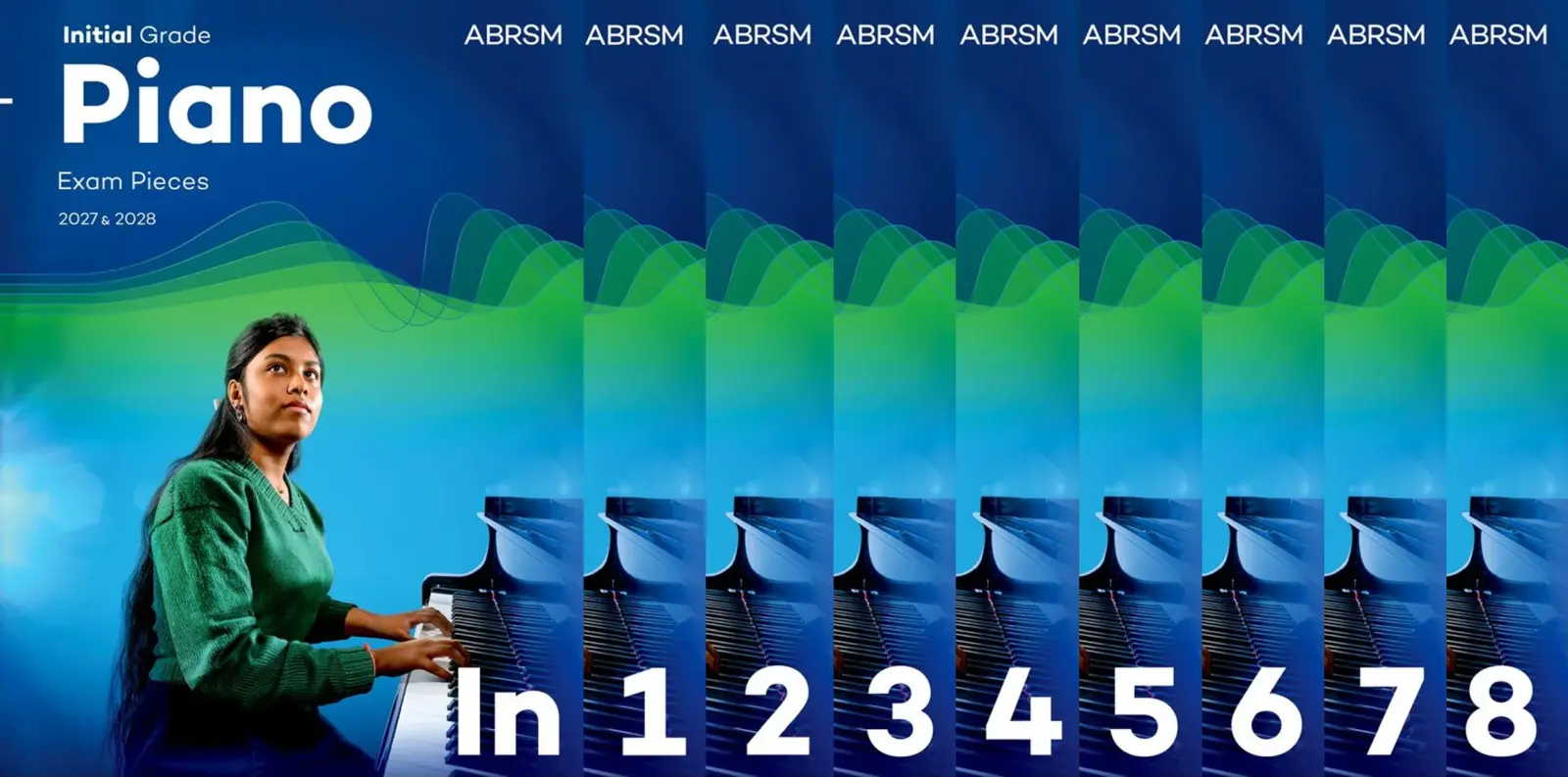
One final point about representation concerns the covers themselves. I’m very much in favour of positive representation, and it’s obviously good for exam books to encourage a perception that classical music doesn’t have to be all about white men. But since the 2023–2024 syllabus, ABRSM’s piano books have been using a series of prominently featured children from minority ethnic backgrounds on the covers, and this is a tricky line to walk. Done well, it can feel warm, inclusive and encouraging of diversity. Done badly, it risks looking more like box-ticking than care.
This is why I find the 2027–2028 covers so uncomfortable. Speaking as someone who used to work professionally as a photographer, I think the image has been very poorly handled. It’s obviously been taken with a very wide-angle lens at almost waist level, with terrible lighting, and the resulting portrait is unflattering in a way that feels careless rather than respectful. If ABRSM want to highlight diversity and inclusion on their covers, they surely have a responsibility to present the image with real care? Otherwise the result starts to feel less like thoughtful inclusion, and more like a diversity message being delivered without enough care for the person being used to carry it.
What’s new
A couple of new features are worth mentioning in the new syllabus…
One-hand repertoire
The most interesting new feature is the expansion of the one-hand repertoire. The previous syllabus introduced one-hand pieces for Grades 1–5 in the Performance Grades, and the new syllabus now extends this to Grades 6–8. This is a very welcome development, broadening access for students with certain injuries or disabilities.
It’s a shame this option has been presented in such a confusing way though. These pieces are only listed in the Performance Grades syllabus PDF. At first I was confused as to why they weren’t also listed in the Practical Grades syllabus, until I realised that two hands would be required for the scales and sight-reading! But the problem is that unless you read the online Performance syllabus document carefully, it would be very easy to miss them altogether. They’re not listed in the books, and the official recordings don’t include them.
QR codes and online resources
Another new feature in the printed books is the inclusion of QR codes above the pieces, linking to supplementary video tutorials and performances, along with extra information to help with the pieces in the books (but not the alternative list pieces). All these performance videos feature top-down camera views of the keyboard, which could be a genuinely useful resource to help with tricky fingerings not marked in the score.
This does raise the tricky question of whether teachers may still want to buy the separate Teaching Notes booklet (RRP £11.50), which also only covers the pieces in the books. It might seem difficult to justify, because the online resources now generally provide at least as much detailed guidance as this booklet- which, as always, gives you just three short paragraphs per piece.
The pieces
So, most importantly, what about the repertoire itself?
Grade 8
This is where we see the most obvious difference compared to the previous syllabus, with what looks like a massive overcorrection to criticisms that the last Grade 8 book consisted of pieces which were too easy for this level. Well, there’s no chance of that this time round! I find it interesting to note that all three List A pieces in the book are individual movements of works which are in the ARSM diploma syllabus- I don’t think that’s a coincidence. I’m guessing that ABRSM are hoping that having got one of these under your belt, you might then be tempted to take their first diploma with the whole of Bach’s Italian Concerto or Beethoven’s Pathétique Sonata, or a selection of movements from Ravel’s Le tombeau de Couperin- having already learnt one of the movements in the Grade 8 exam. Oh, and if you watch the tutorial video for the Ravel fugue, it is in fact mentioned that you might want to go on and learn more movements from Le tombeau de Couperin for an ARSM diploma! So Grade 8 has been whipped into shape as a serious stepping stone towards ‘serious’ classical diplomas.
The ‘pop’-ification of List B
So, as I mentioned at the beginning of this review, I’m very confused by ABRSM’s direction.
How come one sugary popular-style piece is being very obviously and deliberately placed into all the other grade books, with similar pieces also creeping into the List B alternative options- yet Grade 8 is structured as a ‘serious’ classical stepping stone to a diploma?
To be clear, the majority of List A and List B pieces still reflect a mostly classical core, and List A has been tightened up a bit since the previous syllabus to focus more on classical styles. Gone, for example, is the odd situation where it was possible to take one grade exam in particular playing only Nikki Iles arrangements and compositions across Lists A, B, and C! This is not yet a syllabus that has abandoned classical music. But the problem is that even a few non-classical pieces creeping into List B can be enough to let a student take an ABRSM exam choosing to play only one classical piece. And for those taking a Performance exam, this means that only one out of four pieces has to be classical. Could this create a bit of a shock for some students with little classical experience when they get to Grade 8? The impression is that ABRSM seem pulled in many directions, and are tentatively trying to please everybody in a slightly indecisive way.
That said, I want to be fair- the pieces on the whole are chosen well. There are lots of enjoyable discoveries here, and some grades contain genuinely excellent finds. I don’t want this review to give the impression that I opened the books and found nothing but horror, sugar, and marketing dust! There is plenty here that teachers and students will enjoy, and many pieces that I will enjoy teaching.
However, one consequence of this decision to put accessible popular-style pieces in List B is a noticeable lack of Romantic and early 20th century repertoire across most of the books. The alternative lists partly compensate for this, but the books themselves are what most teachers and students will encounter first, and not everybody will be able to afford extra books. I wonder if most teachers would have chosen to trade Romantic repertoire for accessible contemporary genres willingly?
Some List A concerns
As a brief aside, I was playing a couple of List A pieces by ‘big name’ composers and wondering to myself why they were so dreadful and dull- only to discover they were written by tiny children. For example, a Minuet by Mozart aged six, and a Polonaise by Chopin aged seven. But this does feel emblematic of a problem with a few grades suffering from uninspired and stodgy List A choices. However, this could be a matter of subjective personal taste, so I’ll be interested to see other opinions!
Hand-span issues
Now, one issue that jumped out at me when playing through the higher grades was what felt like a substantial and noticeable increase in the requirement for large hand stretches. I checked against the previous syllabus, and the increase in awkward or wide stretches does seem to be real and consistent, including more pieces requiring stretches of over an octave where I felt it might not be possible to redistribute the hands or spread the notes convincingly. This is obviously going to cause problems for younger students, and for many girls and women- making many pieces in some of the books unrealistic options.
Having said that, I was interested to hear the official recordings on Spotify in which Dinara Klinton, who I mentioned earlier, seems to have small enough hands that many ninths and tenths have to be spread- and she does a great job of making them sound convincing. But there’s a difference between a major international competition winning concert pianist spreading tricky intervals and somebody taking an ABRSM exam! I just couldn’t help feeling that somebody stopped considering hand sizes when coming up with the new repertoire selections.
Production quality
There are some worrying slips in standards concerning typesetting and engraving. In my reviews of previous syllabuses, I regularly called attention to moments where rhythmic notation was arranged and spaced in confusing ways. Teachers and professional musicians may be less sensitive to this when reading music, but I do notice that students are frequently thrown by poor typesetting of rhythms. Another regular concern is that it’s common for me to identify several misprints each time I sight-read through a new set of ABRSM grade books. But I had praised the most recent 2025–2026 syllabus for fixing these issues, with consistently high-quality editing and no misprints jumping out at me. I was hoping that this would be a permanent eradication of these problems.
It’s a shame, then, that I’m noticing some of these rhythm typesetting issues starting to creep back across the books. It’s not as bad as it used to be, but it’s still enough to catch my eye in most books. Here are two examples that show the kind of issue I mean:
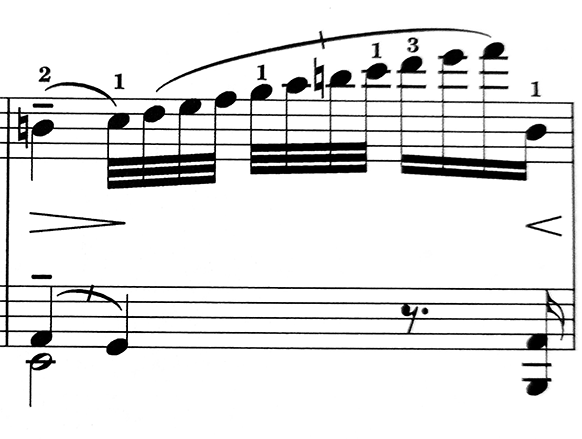
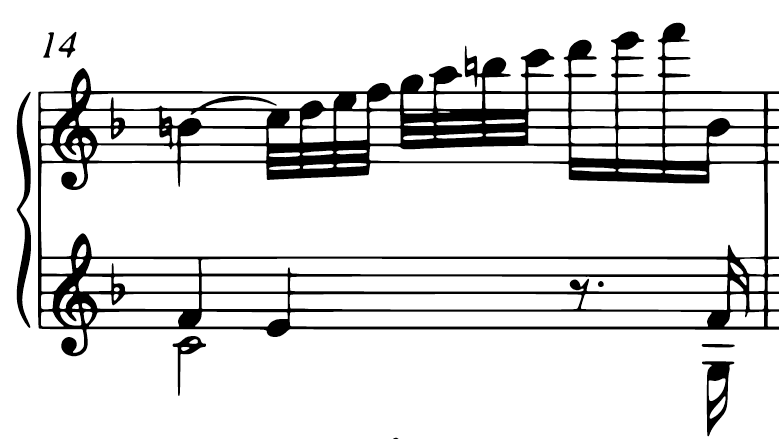
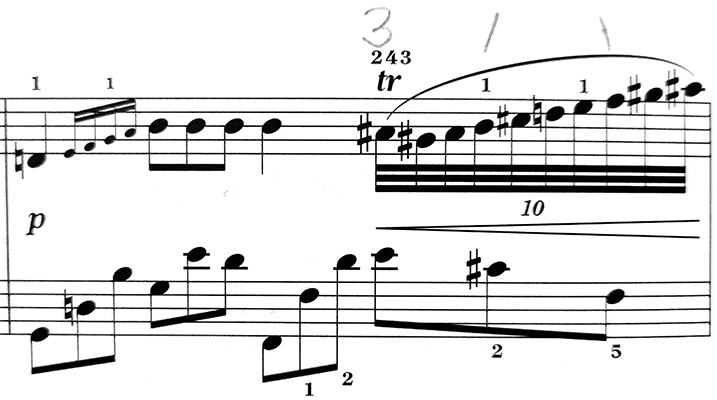
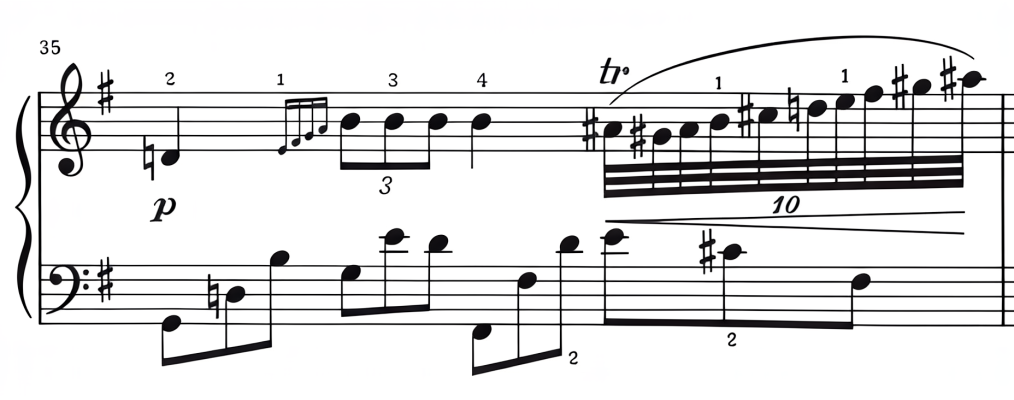
The new books are mostly free of misprints, except for Waltz Caprice by Cairos-Rego in Grade 8. Funnily enough, when you click on the QR code and watch the relevant tutorial, the teacher describes the harmonic vocabulary of this piece… and these harmonic features are exactly why I could hear that there were misprints- which I checked by listening to a historical recording. These misprints have made their way into the official recording. There are other minor typesetting issues with this piece, but also, much more importantly, an absolutely impossible metronome marking- making me wonder what on earth happened with this one piece?
Choosing an exam board
So, what does all this mean for anybody interested in taking a piano exam?
ABRSM remain a reasonable choice for students not primarily looking for a certificate that represents solid classical mastery (which was always traditionally the point of ABRSM exams!). There’s now a certain level of identity confusion, so for students who have one foot in classical repertoire and another foot wandering into other styles, this syllabus could be a good opportunity to explore and have fun with lots of fresh, interesting new music from different genres. Working towards an ABRSM exam could still be useful to help motivate students playing classical repertoire, as long as they don’t mind that the certificate may no longer convey the same level of achievement in the classical music world that it once did.
But these same people are definitely going to want to check out the Trinity syllabus, which not only has an enjoyable and solid core of traditional classical repertoire, but also what I would consider a much stronger selection of pieces in popular genres such as pop, jazz, game and film music, and so on. If you want to focus on the usual rigorous classical repertoire, you can. But you can also play purely non-classical styles for an entire exam if you want to. Trinity also offers two sets of supporting tests, focusing either on classical or popular-music skills. Their books are better value for money- they come in ‘standard’ and ‘extended’ editions. The standard books are a little cheaper than ABRSM’s, and contain 12 pieces per book, compared with ABRSM’s 9. But if you spend a little more, this jumps up to a massive 21 pieces per book, and I loved these books when I reviewed them. There are tables at the end of this review comparing the costs of books and exams between all the examination boards discussed here.
For those who want exam certificates that demonstrate a more rigorous and solid classical attainment level, LCME would be the best bet. They’ve recently released a new syllabus, which I will be reviewing soon.
And for those who are absolutely not interested in classical music- although Trinity is a strong option as you can conveniently sidestep all the classical repertoire- I would also recommend RSL Rockschool and ABRSM Jazz Exams. What I particularly like about Rockschool is the emphasis on playing along with backing tracks, which does a great job of tightening up students’ rhythm; I sometimes encourage my classical students to look at these exams as a way of tightening up rhythmic weaknesses. The ABRSM Jazz exams are great for students interested in learning to improvise, and Grade 5 Jazz Piano is a much more fun alternative to Grade 5 Theory!
Final verdict
There’s a lot to love about this syllabus, with many fresh new discoveries and mostly well-curated pieces full of character that I’m really going to enjoy teaching. After accusations of dumbing down and making some of the Grade 8 pieces too easy the last time round, ABRSM seem to have reacted sharply by making it consistently more challenging than usual. Perhaps one contributing factor may be that the List A choices are an obvious sign that ABRSM are hoping students will use these pieces as a springboard for their ARSM diploma.
But look further down at the other grades, and it’s very clear that there’s been a deliberate decision to add ‘enticing’ sugary non-classical pieces into List B, including one in each book below Grade 8. While some might argue that it can only be a good thing to offer students enjoyable choices that feel more ‘relevant’ to ears used to contemporary popular music, I’ve laid out many arguments in the first half of this review for why I personally believe this is a problematic direction for ABRSM.
I’m not saying that every student must be marched through classical repertoire under candlelight while a bust of Beethoven judges them from the mantelpiece! But I do believe that as many people as possible should be encouraged to explore the world of classical music. There’s been so much talk about making music education more in touch with younger generations, and rejecting the problematic ‘colonial’ tradition of classical music. My concern is that by diluting classical exams, we may be accelerating a widespread educational stance that treats historical tradition as something that’s dead, rigid, and no longer relevant. But from my perspective, tradition is a deep well of living, evolving riches- and we risk becoming cultural orphans if we unwittingly cut ourselves off from it…
The individual grades
I’ve made detailed notes on every grade, but this review is already long enough, so I’ll be publishing those separately as a follow-up! Subscribe on your usual podcast app and follow my YouTube channel to be notified when I publish my grade-by-grade review.
Tables and statistical notes
Repertoire diversity: books and alternative choices, Grades 1–8
| Syllabus | Total listings | Women composers | BBIPOC composers | Women classical composers | BBIPOC classical composers |
|---|---|---|---|---|---|
| 2019–20 | 158 | 12 / 8% | 3 / 2% | 4 / 3% | 3 / 2% |
| 2021–22 | 240 | 45 / 19% | 9 / 4% | 22 / 9% | 8 / 3% |
| 2023–24 | 312 | 61 / 20% | 34 / 11% | 31 / 10% | 20 / 6% |
| 2025–26 | 385 | 85 / 22% | 43 / 11% | 37 / 10% | 21 / 5% |
| 2027–28 | 385 | 93 / 24% | 41 / 11% | 39 / 10% | 26 / 7% |
Repertoire diversity: books only, Grades 1–8
| Syllabus | Women composers | BBIPOC composers | Women classical composers | BBIPOC classical composers |
|---|---|---|---|---|
| 2019–20 | 5 / 7% | 2 / 3% | 2 / 3% | 2 / 3% |
| 2021–22 | 19 / 26% | 3 / 4% | 11 / 15% | 2 / 3% |
| 2023–24 | 20 / 28% | 14 / 19% | 13 / 18% | 7 / 10% |
| 2025–26 | 21 / 29% | 16 / 22% | 10 / 14% | 6 / 8% |
| 2027–28 | 23 / 32% | 12 / 17% | 9 / 12% | 9 / 12% |
Notes on the diversity tables:
- Non-white / BBIPOC composers: I have used a broad working definition based on ABRSM’s use of BBIPOC: Black, Brown, Indigenous and People of Colour, including named composers of Black and African heritage, Latine/Hispanic, Middle Eastern and North African, multi-racial, Asian, Indigenous, or other ethnically under-represented backgrounds. I have also taken a broad Global South perspective where relevant.
- Classical/art-music listings: these classifications involve judgement calls. I considered the composer’s wider musical world, educational and professional background, the idiom of the individual piece, and the way the piece functions in the syllabus. In borderline cases, I have tried to be consistent rather than perfectly definitive.
- Listings rather than unique composers: if the same composer appears multiple times, each appearance is counted separately. Anonymous traditional-source entries are excluded from named-composer counts.
Cost comparison: in-person exams
Cell format: book + exam = total.
| Grade | ABRSM | ABRSM Jazz | LCME | Trinity | Rockschool |
|---|---|---|---|---|---|
| 1 | £10.95 + £62 = £72.95 | £9.95 + £62 = £71.95 | £8.99 + £59 = £67.99 | £10.45 + £61 = £71.45 | £18.99 + £65 = £83.99 |
| 2 | £11.95 + £70 = £81.95 | £9.95 + £70 = £79.95 | £9.99 + £68 = £77.99 | £11.65 + £68 = £79.65 | £18.99 + £73 = £91.99 |
| 3 | £12.95 + £82 = £94.95 | £10.95 + £82 = £92.95 | £9.99 + £74 = £83.99 | £12.65 + £76 = £88.65 | £18.99 + £85 = £103.99 |
| 4 | £13.95 + £89 = £102.95 | £10.95 + £89 = £99.95 | £10.99 + £81 = £91.99 | £13.85 + £86 = £99.85 | £19.99 + £93 = £112.99 |
| 5 | £14.95 + £96 = £110.95 | £11.95 + £96 = £107.95 | £11.99 + £89 = £100.99 | £14.95 + £99 = £113.95 | £19.99 + £102 = £121.99 |
| 6 | £16.95 + £112 = £128.95 | £18.95 + N/A = N/A | £12.99 + £103 = £115.99 | £16.65 + £109 = £125.65 | £20.99 + £116 = £136.99 |
| 7 | £18.95 + £121 = £139.95 | £18.95 + N/A = N/A | £13.99 + £112 = £125.99 | £17.75 + £122 = £139.75 | £20.99 + £125 = £145.99 |
| 8 | £22.95 + £143 = £165.95 | £18.95 + N/A = N/A | £14.99 + £128 = £142.99 | £18.85 + £138 = £156.85 | £20.99 + £139 = £159.99 |
Cost comparison: online exams
Cell format: book + exam = total.
| Grade | ABRSM | ABRSM Jazz | LCME | Trinity | Rockschool |
|---|---|---|---|---|---|
| 1 | £10.95 + £55 = £65.95 | £9.95 + £55 = £64.95 | £8.99 + £57 = £65.99 | £10.45 + £55 = £65.45 | £18.99 + £50 = £68.99 |
| 2 | £11.95 + £64 = £75.95 | £9.95 + £64 = £73.95 | £9.99 + £64 = £73.99 | £11.65 + £61 = £72.65 | £18.99 + £56 = £74.99 |
| 3 | £12.95 + £72 = £84.95 | £10.95 + £72 = £82.95 | £9.99 + £71 = £80.99 | £12.65 + £68 = £80.65 | £18.99 + £63 = £81.99 |
| 4 | £13.95 + £79 = £92.95 | £10.95 + £79 = £89.95 | £10.99 + £76 = £86.99 | £13.85 + £78 = £91.85 | £19.99 + £71 = £90.99 |
| 5 | £14.95 + £87 = £101.95 | £11.95 + £87 = £98.95 | £11.99 + £83 = £94.99 | £14.95 + £88 = £102.95 | £19.99 + £78 = £97.99 |
| 6 | £16.95 + £100 = £116.95 | £18.95 + £100 = £118.95 | £12.99 + £96 = £108.99 | £16.65 + £98 = £114.65 | £20.99 + £90 = £110.99 |
| 7 | £18.95 + £108 = £126.95 | £18.95 + £108 = £126.95 | £13.99 + £103 = £116.99 | £17.75 + £109 = £126.75 | £20.99 + £97 = £117.99 |
| 8 | £22.95 + £127 = £149.95 | £18.95 + £127 = £145.95 | £14.99 + £118 = £132.99 | £18.85 + £120 = £138.85 | £20.99 + £109 = £129.99 |
Notes on the cost tables: prices and fees are those I found at the time of writing, and may change. Trinity book prices refer to the Standard editions, which contain 12 pieces per grade. Trinity also publish Extended editions, adding a further 9 pieces for a total of 21 pieces per grade.
Endnotes
- For discussion of popular music as a recorded, sound-based medium in which timbre, texture, production and sonic space are central to analysis, see Allan F. Moore, Song Means: Analysing and Interpreting Recorded Popular Song; Moore’s work on persona/environment in recorded song; and Megan Lavengood’s work on timbre analysis. ↩
Leave A Comment
You must be logged in to post a comment.